Your law-firm client just asked why they don't come up when someone types "best car accident lawyer near me" into ChatGPT. You don't have a good answer yet. Neither does most of the industry, which is exactly why this is the easiest service you'll add all year.
The behavior already shifted. In an August 2026 survey of 1,110 US consumers, 41.9% said they would use ChatGPT to research which lawyer to hire, up from 28.1% a year earlier and 9% in 2023. Half of all respondents would use at least one AI answer engine before they call anyone. Google still leads at 71.9%, so this isn't the death of search. It's a second front your client's competitors haven't claimed.
Answer engine optimization is getting cited, not ranked
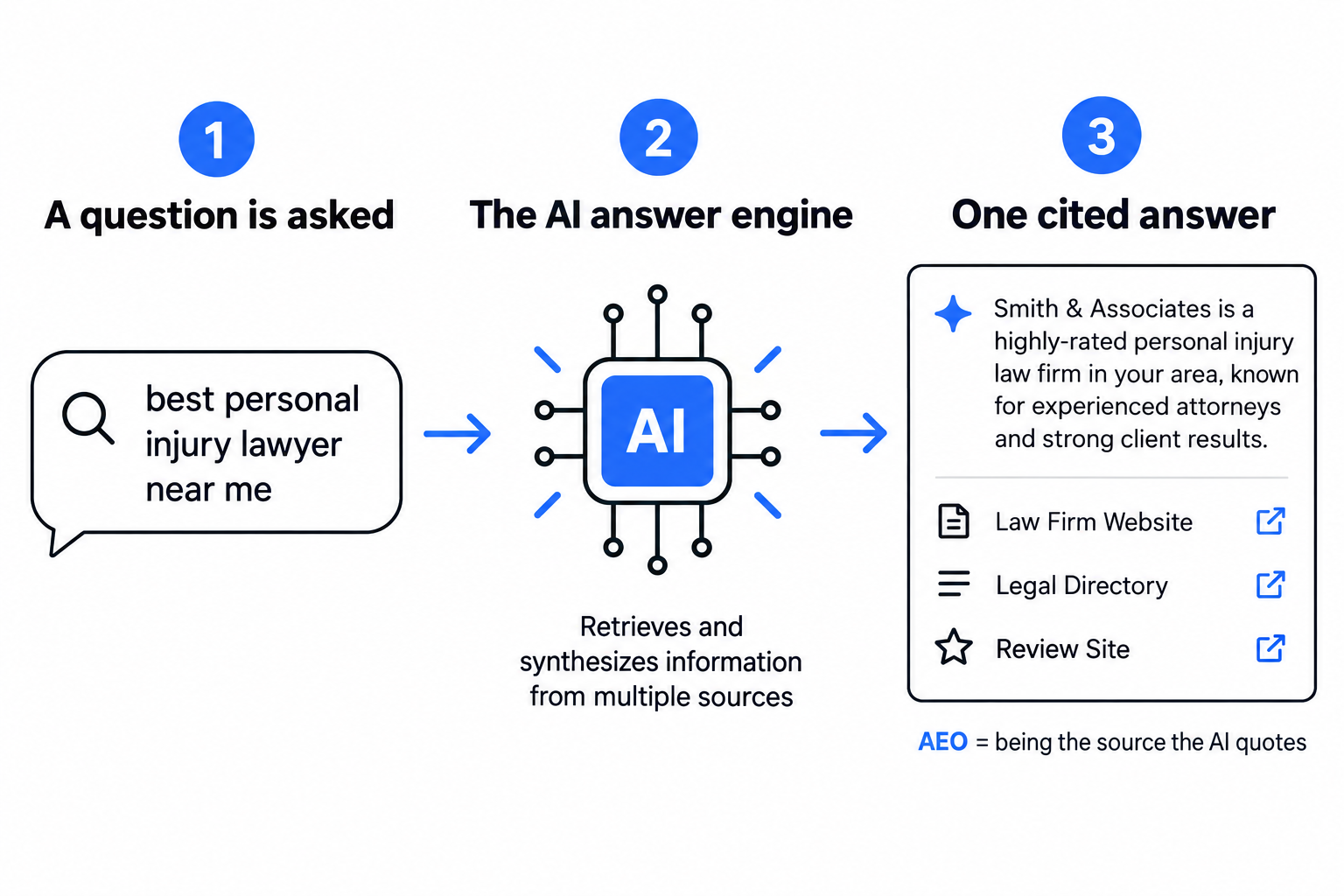
Answer engine optimization (AEO) is the practice of structuring content so an AI engine quotes it as the source of a direct answer. The target isn't position three on a results page. It's being the sentence ChatGPT reads back, with your client's name on it.
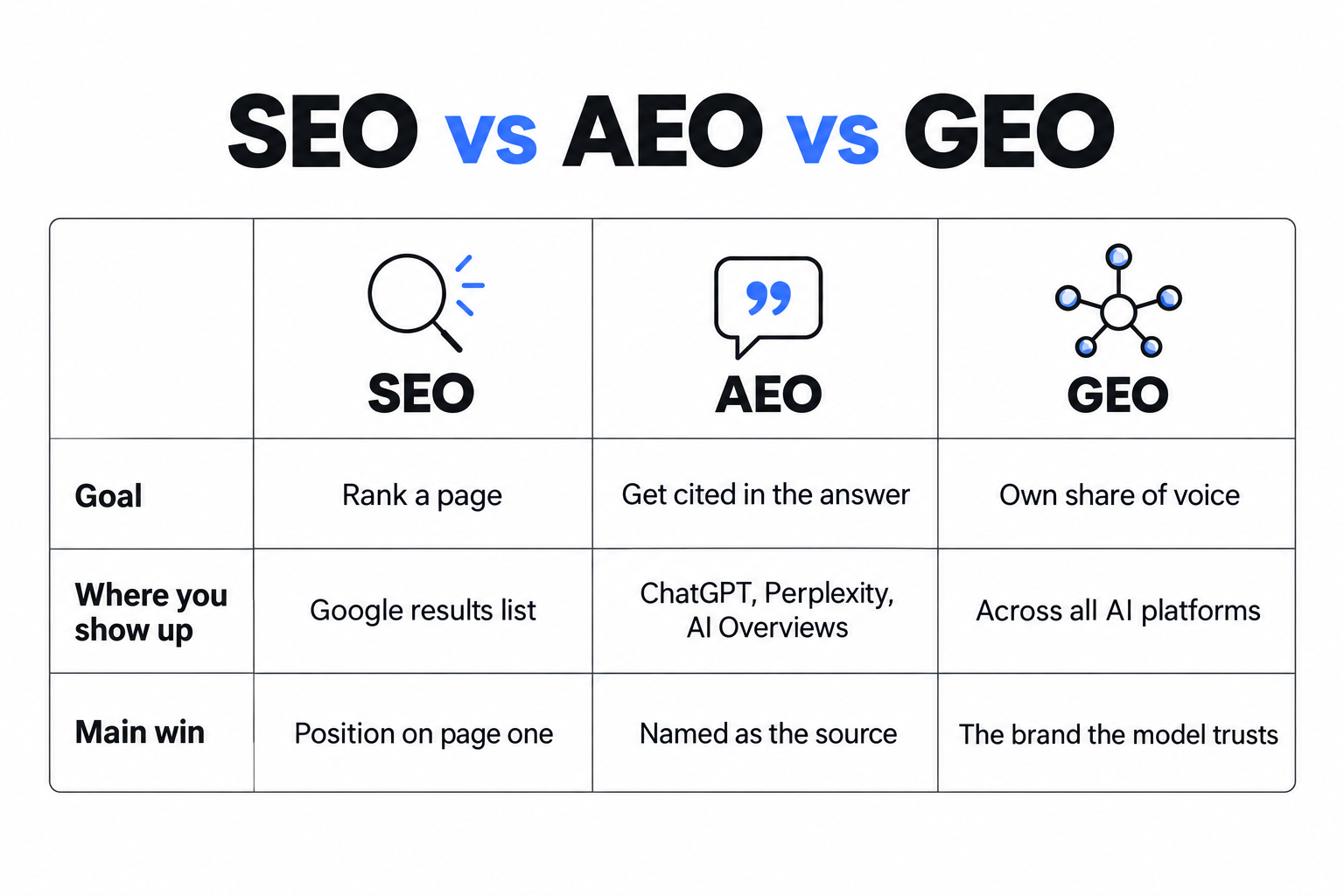
People fold AEO into a wider term, generative engine optimization (GEO). The split is simple. AEO wins the specific answer: your client gets named when someone asks "who handles rideshare accident claims in Austin." GEO works the bigger picture, your client's share of voice across every AI platform. Run AEO first. It's the part a law firm can win this quarter.
The engines pick sources on different rules than Google
Rank-one thinking breaks here. Each engine retrieves live pages, re-reads them, and keeps only the ones it actually quotes. Three patterns matter for the playbook.
ChatGPT runs a search, pulls a batch of pages, and cites roughly 15% of what it retrieves. It leans hard on a short list of trusted domains, around 30 of them account for about two-thirds of its citations inside any given topic, and it favors clean, self-contained passages. About 44% of its citations come from the first 30% of a page, so a buried answer never gets used.
Perplexity cites more generously, 6 to 9 references on a typical answer, and 93% of its answers carry at least one citation. It pulls different facts from different pages, so your client doesn't have to be the single best source. Owning one subtopic earns the citation for that subtopic.
Google AI Overviews reach roughly 2 billion people a month and cite broadly, 88% of Overviews name three or more sources. The catch is the gate: about 97% of cited pages already sit in Google's top 20 organic results. AI Overviews don't replace ranking for a law firm. They reward the firms that already rank and structure their pages to be quoted.
The playbook you can run for a law-firm client
Six moves, in order of payoff.
Answer the question in the first two sentences. Lead every practice-area and FAQ page with a direct, self-contained answer before the context. "In Texas, you generally have two years from the date of a car accident to file a personal injury claim." The engines lift the top of the page, so put the answer there.
Define the entities. Name the firm, the attorneys, the practice areas, and the cities in plain language the model can attribute. Vague "we fight for you" copy gives an engine nothing to quote. "Our Austin office handles rideshare and commercial truck collision claims" does.
Mark it up. FAQPage, LegalService, and LocalBusiness schema tell the engine what the page is without guessing. FAQ schema feeds AI Overviews directly. This is the single most mechanical, most skippable, most effective hour of the job.
Win the directories the engines trust. Legal answers lean on Avvo, Justia, FindLaw, Martindale-Hubbell, and Lawyers.com. A complete, consistent profile on each is table stakes for getting named in a legal answer.
Run a real review program. Reviews are an entity-authority signal every engine reads, and compliant review generation is a service you can bill for on its own.
Earn the mentions. ChatGPT and AI Overviews over-cite Reddit, YouTube, and editorial sites over brand-owned pages. A client's own site alone won't carry it. A thread they participate in, a local news mention, a video walk-through of the office, all of it feeds the model's picture of who this firm is.
Measure AI visibility, or you're selling vibes
Rank trackers don't see this. Track it directly: run the prompts a prospect would ("best personal injury lawyer in [city]," "how long do I have to sue after a crash in [state]") across ChatGPT, Perplexity, and Google, and log whether the firm gets named, cited, or skipped. That share-of-answer number, month over month, is the report that renews the retainer.
One lesson from the firms doing this well: an AI-referred lead still has to convert. The engines send a motivated prospect to a contact form or a phone line, and a form that answers in six hours loses the case the firm paid in visibility to win. Pair the AEO work with intake that responds in seconds, or the citation is a gift to whoever answers first.
Frequently asked questions
What is answer engine optimization? Answer engine optimization is structuring a website so AI engines like ChatGPT, Perplexity, and Google AI Overviews cite it as the source of a direct answer. It targets being quoted inside the answer rather than ranked in a list of links.
How is AEO different from SEO for a law firm? SEO earns a ranking position on Google's results page. AEO earns a citation inside an AI-generated answer. They overlap, roughly 97% of AI Overview citations come from pages already in Google's top 20, so strong SEO is the foundation. AEO adds the structure, schema, and clear entity definitions the engines need to quote a page.
Can a law firm actually get cited by ChatGPT? Yes. ChatGPT favors clean, self-contained answers from trusted domains and legal directories like Avvo and Justia. A firm with direct practice-area answers, correct schema, complete directory profiles, and a real review program gets named for city-and-practice-area questions where most competitors are invisible.
Answer engines are rewriting how injured people find a lawyer, and the agencies that learn the mechanics now will own the service line for years. We break down AI search, legal marketing, and the tactics that actually move cases every week.
Subscribe for the field notes on AI search and law-firm growth, written for the agencies building the playbook.